Legionella Risk Assessment in Student Accommodation: A Concise Guide
Essential Guidance for Managing Water Safety in Student Residences
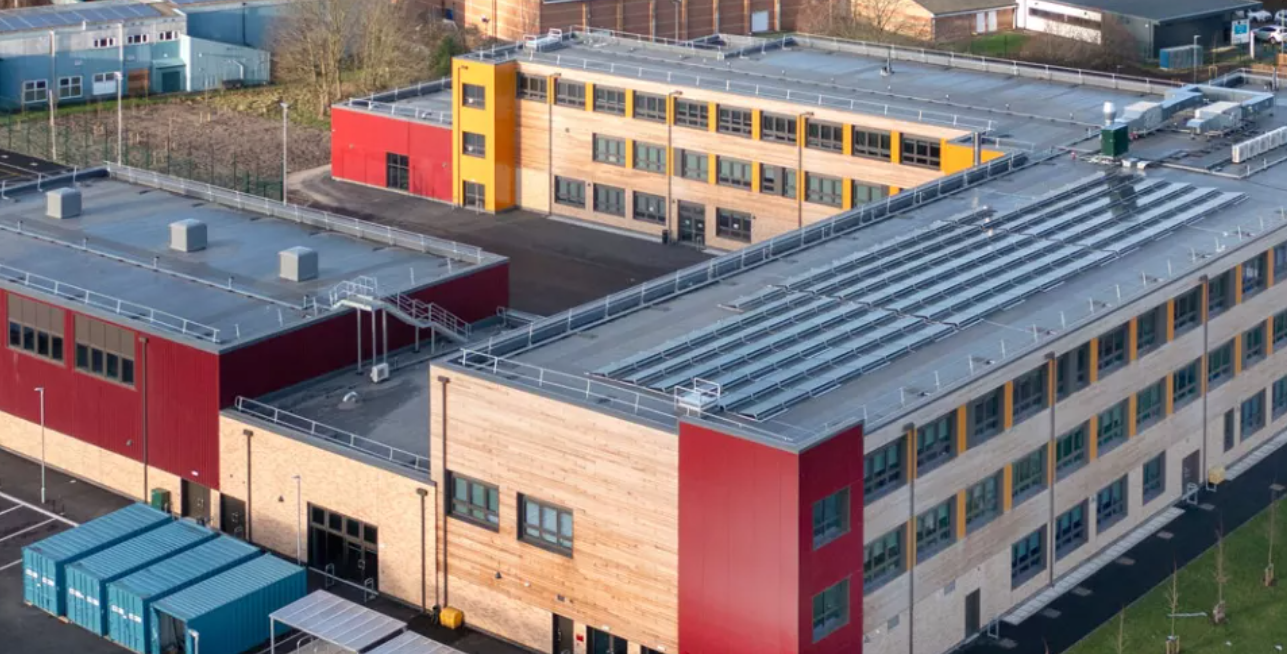
As water safety specialists working with educational institutions, we understand that student residences present distinct challenges for Legionella management. The combination of extensive building networks, seasonal occupancy patterns, and shared facilities creates a unique risk profile requiring specialised approaches.
This guide explores the essential considerations for conducting Legionella risk assessments in student accommodation, focusing on building complexity and key risk factors.
Understanding Your Legal Position
As a student accommodation provider or university estates manager, you likely serve as either the duty holder or responsible person under the Health and Safety at Work Act 1974 and COSHH Regulations 2002. The HSE's Approved Code of Practice L8 and HSG274 provide the framework for compliance, but effective implementation requires understanding your specific operational context.
Your key responsibilities include:
- Ensuring comprehensive risk assessments by competent individuals
- Implementing appropriate control measures
- Maintaining ongoing monitoring processes
- Keeping detailed records
- Providing appropriate training to staff at all levels
Proactive engagement with these responsibilities creates safer environments while effectively managing compliance obligations.
Building Complexity: A Critical Factor in Risk Assessment
The Challenge of Student Accommodation Water Systems
The physical configuration of accommodation water systems shapes your Legionella risk profile and management requirements:
1. Multiple Building Networks
Student accommodation often comprises varied buildings:
- Traditional halls with centralised systems
- Purpose-built student accommodation (PBSA) with modern infrastructure
- Converted properties with retrofitted facilities
- Mixed developments combining different building types
This diversity creates a complex network requiring comprehensive mapping. Critical risk areas often emerge where different systems interface, particularly in campuses developed over time.
2. Mixed Building Stock and Age Profiles
Many accommodation portfolios include buildings from different eras:
- Historic halls with legacy pipework
- Mid-century buildings often featuring galvanised pipework
- Modern accommodation with high proportions of ensuite facilities
- Converted properties with adapted water systems
This mixed portfolio results in buildings with different system designs existing within the same estate. We recently assessed a university campus where Victorian-era halls with traditional bulk hot water systems existed alongside modern PBSA with instantaneous water heaters – requiring completely different management approaches.
3. High-Density Distribution Systems
The concentrated nature of student accommodation creates specific design challenges:
- Multiple similar outlets stacked vertically in accommodation blocks
- Extensive pipework serving numerous adjacent rooms
- Centralised plant serving multiple accommodation units
- Shared facilities creating water usage hotspots
These high-density systems require careful design to maintain appropriate temperatures and flow rates throughout all areas, particularly in taller structures where consistency can be challenging.
Operational Complexity
1. Dramatic Occupancy Fluctuations
Student accommodation experiences extreme variations in occupancy:
- Term-time patterns with near-complete occupancy
- Holiday periods with minimal or zero occupancy
- Reading weeks creating partial occupancy
- Summer lettings with different usage patterns
During vacation periods, extensive sections may remain completely unused for weeks or months, creating significant stagnation risks. Managing these dramatic occupancy swings represents one of the most significant challenges for accommodation providers.
2. Complex Management Structures
Student accommodation often involves multiple stakeholders:
- University estates departments responsible for infrastructure
- Accommodation management teams handling day-to-day operations
- Outsourced facilities management providers
- External contractors providing specialist services
This complexity can create challenges in responsibility allocation and coordination of Legionella control activities.
Key Risk Factors in Student Accommodation
1. Ensuite Bathroom Proliferation
Modern student accommodation typically features numerous ensuite bathrooms:
Shower Facilities
Showers generate aerosols that can transmit Legionella bacteria if present:
- Temperature maintenance requirements (hot >50°C, cold <20°C)
- Regular cleaning and descaling of shower heads
- Flushing protocols for unoccupied rooms during holidays
- TMV maintenance and testing
In large accommodation blocks with hundreds of similar shower units, we recommend implementing a representative sampling approach for regular monitoring, with comprehensive checks prior to each academic year.
Holiday Period Stagnation
The extended vacant periods create significant stagnation risks:
- Winter, spring and summer breaks leaving entire blocks empty
- Systems remaining unused for weeks or months
- Returning students immediately using systems after prolonged inactivity
We recommend comprehensive holiday period management protocols, with particular attention to system recommissioning before students return, including systematic flushing, temperature verification, and enhanced cleaning of shower heads.
2. Communal Facilities
Many student accommodations incorporate shared facilities:
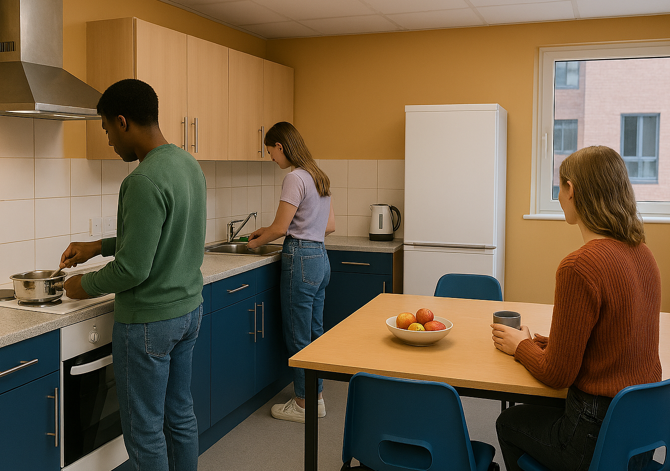
Shared Kitchens
Communal kitchen areas feature multiple water outlets:
- Multiple sinks with different usage frequencies
- Drinking water facilities
- Dishwashers with complex internal systems
- Instant hot water dispensers
These experience intense but potentially uneven usage, requiring clear identification of less frequently used outlets and appropriate flushing regimes.
Laundry Facilities
Centralised laundry rooms present specific considerations:
- Commercial washing machines with complex internal systems
- Hot and cold feeds with varying usage patterns
- Multiple machines creating redundancy and variable usage
Specific protocols are needed for these areas, particularly during periods of low occupancy.
3. Building Design Factors
Dead Legs and Low-Flow Areas
Sections of pipework where water movement is limited create ideal conditions for Legionella colonisation:
- Building modifications leaving unused pipe sections
- Room layouts standardised despite varying distances from risers
- System extensions poorly integrated with original infrastructure
Detailed system mapping is essential to identify these problem areas.
Temperature Control Challenges
Maintaining appropriate temperatures throughout extensive systems presents significant challenges:
- Heat loss in long pipe runs serving multiple outlets
- Inadequate insulation causing cold water warming
- Return loop balancing issues affecting circulation
- TMV proliferation requiring comprehensive maintenance
Comprehensive temperature profiling provides essential data for identifying problem areas.
Conducting Effective Risk Assessments
Pre-Assessment Preparation
Before physical inspection, gather comprehensive information:
- Building schematics and water system diagrams
- Previous assessment reports
- Maintenance records
- Occupancy data showing term-time and vacation patterns
Accommodation with incomplete documentation often presents higher risks due to knowledge gaps about system configuration.
Assessment Team Composition
The complexity of student accommodation requires appropriate expertise:
- Water hygiene specialist with experience in educational settings
- Facilities representative with knowledge of the accommodation
- Accommodation management providing insight into occupancy patterns
This multidisciplinary approach ensures all aspects are appropriately considered.
Physical Inspection Elements
A thorough assessment should include:
Cold Water Systems
- Storage tank condition and configuration
- Temperature measurements at tanks and representative outlets
- Assessment of insulation effectiveness
- Identification of dead legs or poor flow areas
Hot Water Systems
- Calorifier/water heater configuration
- Temperature measurements at storage, distribution points, and outlets
- Evaluation of return loop balancing
- Assessment of TMV function and maintenance
Student Room Sampling Strategy
With numerous similar outlets, a structured sampling approach is essential:
- Sentinel rooms on each floor (typically nearest and furthest from risers)
- Rotating sample of additional rooms
- Specific attention to rooms with known occupancy issues
- Representative coverage of different room types
Operational Assessment
Evaluation of management practices should include:
- Review of the written scheme of control
- Assessment of monitoring record keeping
- Evaluation of flushing regimes for holiday periods
- Review of staff training and awareness levels
- Evaluation of interdepartmental communication
Implementing Effective Management Systems
Written Scheme of Control
Develop accommodation-specific protocols addressing:
- System description and key control points
- Control measures tailored to occupancy patterns
- Monitoring procedures reflecting seasonal variations
- Record-keeping requirements
- Response procedures for adverse results
Occupancy-Based Management Strategies
Term-Time Operations
During full occupancy, focus on:
- Maintaining system balance despite high demand
- Monitoring temperature stability under high-load conditions
- Implementing representative outlet monitoring programmes
Vacation Period Management
During low occupancy, priorities shift to:
- Implementing comprehensive flushing programmes
- Considering isolation of unoccupied blocks
- Enhancing monitoring to verify control measure effectiveness
Academic Year Transition
The period between academic years requires:
- Structured recommissioning protocols
- Enhanced monitoring during initial reoccupation
- System preparation for the surge in demand during move-in
Interdepartmental Collaboration
Effective management requires coordination across:
- Accommodation management implementing occupancy tracking
- Maintenance personnel conducting regular monitoring
- Housekeeping staff supporting flushing regimes
- Estates teams overseeing infrastructure improvements
Develop clear responsibility matrices and communication protocols, with particular attention to handover periods between terms.
Staff Training Requirements
Implement tailored training programmes:
- Estates and facilities teams: technical training on monitoring
- Accommodation managers: understanding of legal responsibilities
- Housekeeping personnel: awareness of flushing protocols
- Student-facing staff: basic awareness for effective communication
Conclusion
Managing Legionella risks in student accommodation requires understanding both technical and operational factors. The complexity of these buildings, combined with their distinctive occupancy patterns, demands a tailored approach.
By focusing on the key risk factors outlined and implementing robust assessment and management processes, accommodation providers can effectively protect student health while meeting legal obligations. Remember that Legionella control requires ongoing attention as buildings and their usage evolve.
We encourage you to view Legionella risk assessment not merely as compliance but as an integral component of providing safe accommodation for your students, protecting both health and reputation.