Legionella Risk Assessments for Commercial Properties
Commercial buildings present complex, high-risk water systems. Your risk assessment needs to reflect that.
Why Commercial Properties Require a Different Approach
Most legionella risk assessments apply a generic checklist. Commercial properties require a diagnostics-led approach that reflects system complexity, tenant usage, shared responsibilities, and real-world risk.
Understanding Commercial Property Complexity
Commercial properties vary significantly in how water systems are designed, managed, and used.
These differences directly impact risk.
Centralised Water Systems:
- Building-wide water networks across multiple floors or tenants
- Extensive hot and cold water distribution systems
- Mechanical services such as cooling towers, air conditioning units, and humidifiers
- Increased complexity from interconnected building services
- Clear responsibility for whole-system performance
Individual Water Systems:
- Separate water systems or zones for different tenants or sections
- Mixed responsibility between landlord and tenants
- Different usage patterns based on occupancy schedules
- Complexity created by tenancy arrangements and lease boundaries
- Need for clear understanding of system ownership and control
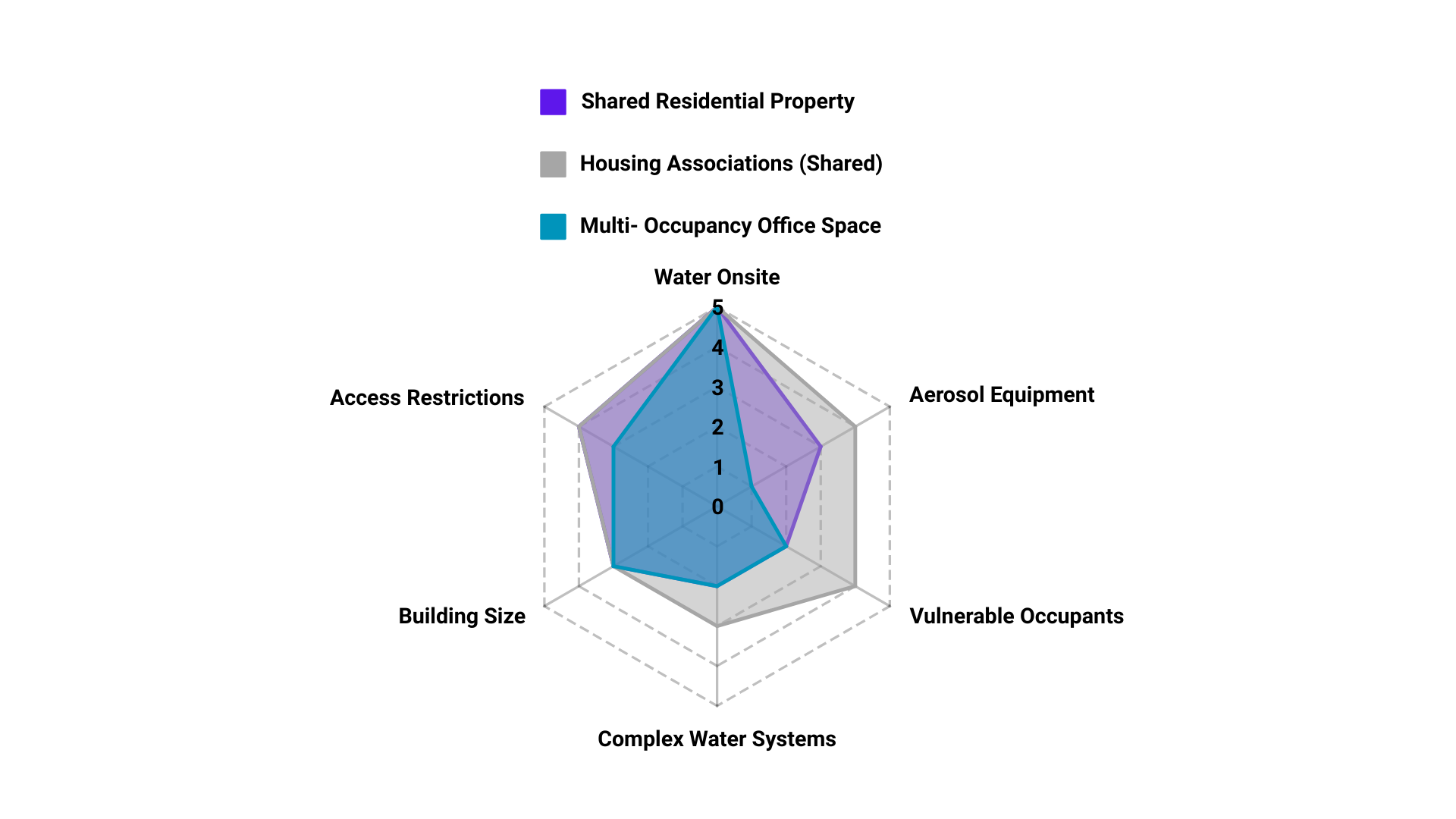
Different commercial property types present varying levels of risk across key factors such as system complexity, occupancy, and access.
This is why a standardised, checklist-based assessment often misses critical risks in commercial environments.
Common Legionella Risk Factors in Commercial Properties
In commercial properties, legionella risk is often driven by how water systems are used, maintained, and managed across different areas of the building.
Poor control of hot and cold water temperatures across large or distributed systems
Stagnation in low-occupancy areas such as unused floors, vacant units, or seasonal spaces
Aging infrastructure, dead legs, and poorly insulated pipework within complex building layouts
Presence of higher-risk individuals in public-facing environments or mixed-use buildings
Incomplete records, unclear responsibilities, or inconsistent monitoring across tenants and building areas
These risks are often missed or underestimated in standard assessments.
Particularly in complex commercial environments.
Industry Reality
"Legionella control obligations vary depending on the nature of your business, the complexity of your buildings, and how your water systems are managed. Getting this wrong can waste valuable time and resources and put your reputation at risk."
What You Get From a Commercial Property Legionella Risk Assessment
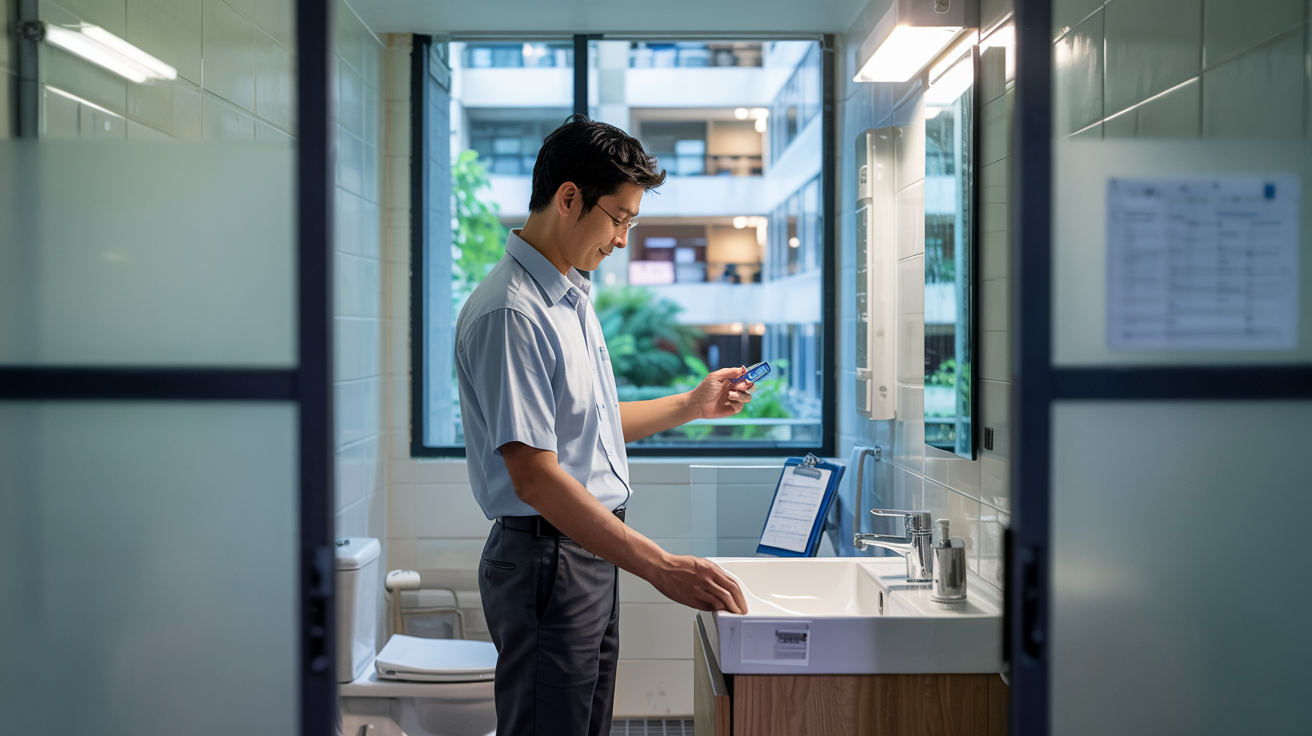
A legionella risk assessment for a commercial property shouldn’t just tick compliance boxes. It should give you a clear picture of system risk, highlight where control is being lost, and provide practical actions to keep your building safe and compliant.
- A full review of your commercial water system, not just a basic outlet check
- Identification of real system risks and areas of non-compliance
- Clear, prioritised actions to reduce risk and improve control
- Compliance-ready documentation to support your responsibilities
- Practical guidance that reflects your building type, usage, and management model
This isn’t just a report — it’s a clear path to control.
Commercial Properties Risk Assessment Pricing Expectations
Costs vary depending on building size, water system complexity, tenancy arrangements, and whether additional services such as sampling or specialist assessment are required.
Residential Buildings
£250 - £1,200
Centralised Systems:
Small blocks to large complexes:
£250 - £1,200
Individual Systems:
Small blocks to large complexes:
£250 - £800
Office Buildings
£300 - £3,000
Complex Office Systems (Centralised):
Small to large systems:
£500 - £3,000
Simple Office Systems (Individual):
Small offices (up to 10,000 sq ft) to large office buildings: £300 - £1,800
Housing Associations
£150 - £2,500
Centralised Systems:
Small blocks to large complexes:
£400 - £2,000
Individual Systems:
Houses to large apartment complexes:
£150 - £250 per property
Note: Prices may increase for buildings with multiple water features, extensive sampling requirements, or those requiring
specialised assessment of air conditioning or process water systems.
Ready for an accurate quote based on your building and water system?
Or book a meeting with us below
What Happens After the Risk Assessment?
For many commercial properties, the real challenge starts after the assessment. Maintaining ongoing compliance, monitoring temperatures, and reducing manual checks.
Legionella Watch gives you real-time visibility across your systems so compliance is easier to maintain.

























Trusted by leading organisations across the UK.
What You Can Expect
Richard Thornett - Lead Engineer - BSW Southampton
“It is like having an engineer 24/7 with their hand on the plant”
James Shaw - Director - Miller Freeman - Nottingham
"The real time data allowed us to make several minor adjustments and changes to achieve satisfactory temperatures throughout the property that would not normally be picked up."
Brendon Moylan - Property Manager - Oakfield Community
“It gives us a good hold on monitoring the whole system”
Andy - Director - Tackle Tidy - Redditch
“I can sleep at night knowing that I'm not putting us in any kind of danger”
Ready to Get a Commercial Property Risk Assessment Quote?
Speak with our team about your building, your water systems, and the level of assessment you need.
We’ll help you get a clear, practical next step.
or call 01827 259346 to get started today.