Void Periods and Legionella Compliance: Why Risk Increases When Properties Are Empty
How Housing Associations Can Manage Legionella Risk and Maintain Compliance During Void Periods
Introduction
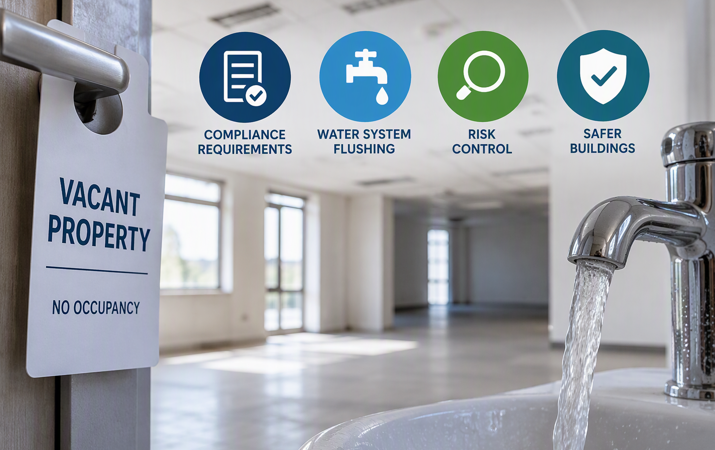
Every housing association manages void periods between tenancies. Operationally, these are often viewed as routine gaps. Time to prepare a property for the next occupant. From a Legionella compliance perspective, however, voids represent a critical shift in risk.
The legal duty to manage water systems does not pause when a tenant leaves. In fact, the conditions created during vacancy often make control more difficult to achieve and more important to demonstrate.
This raises an important question: are organisations truly maintaining control during void periods, or simply assuming they are?
The Underlying Challenge
When a property is occupied, daily water use plays an important role in maintaining system stability. Regular flow helps prevent stagnation, supports temperature control, and reduces the likelihood of bacterial proliferation.
Once a property becomes vacant, that dynamic changes immediately.
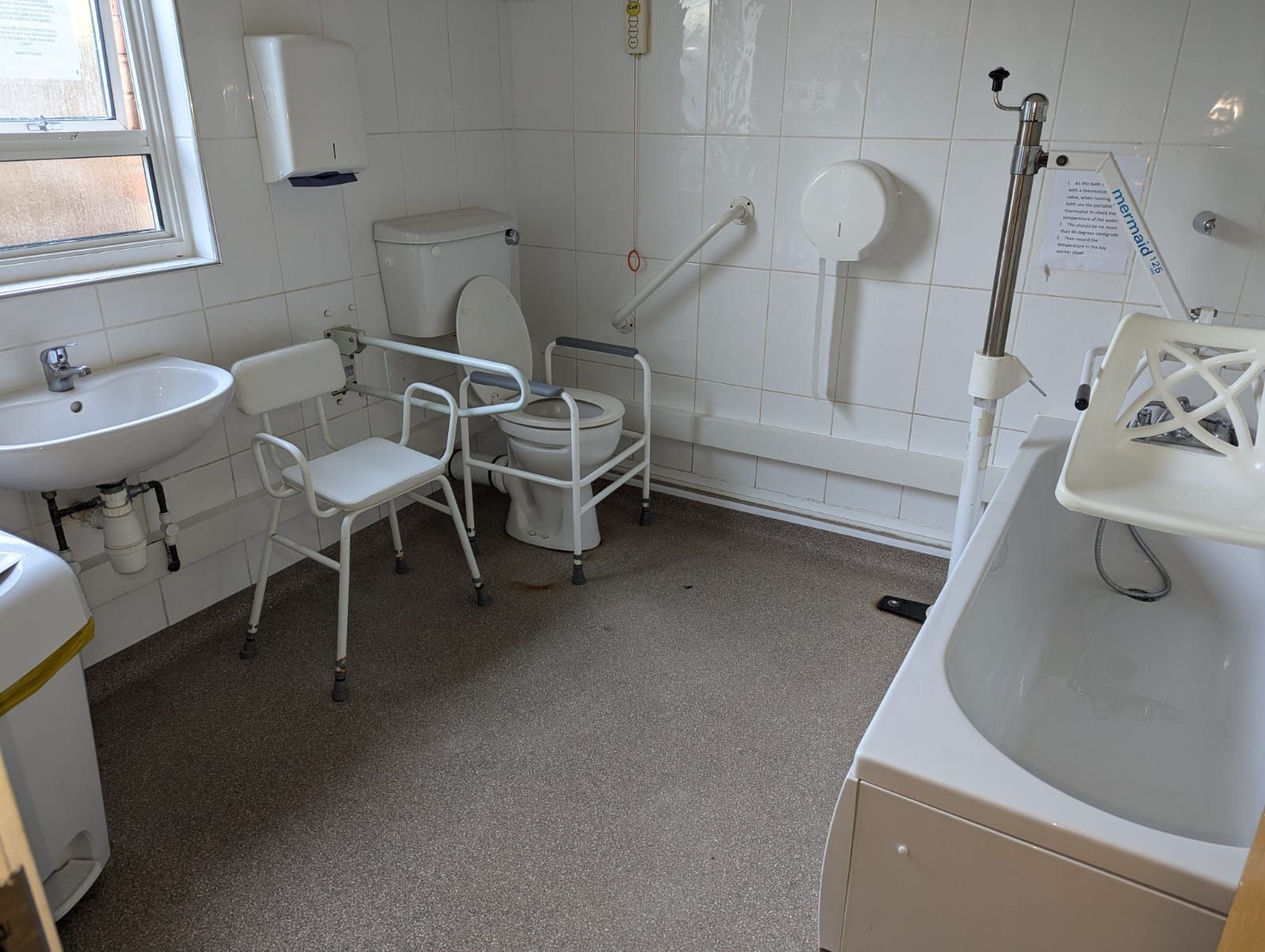
Water begins to stagnate. Temperatures drift outside recommended ranges. Sections of pipework that previously saw regular use, so-called “dead legs”, become static. The system starts to behave differently, and often invisibly.
Despite this, many organisations continue to rely on the same control approach: scheduled manual flushing, recorded on tick sheets or logs.
On paper, this appears robust. In practice, it often introduces risk.
Missed visits, incomplete tasks, and gaps in record-keeping are common, particularly across large property portfolios. A reported completion rate of 78% over six months, for example, means that more than one in five properties had no documented water management activity during vacancy.
Each of those properties represents a potential failure of control, not just a missing record, but a period where system behaviour was neither managed nor understood.
Why This Matters in Practice
The Health and Safety Executive (HSE) is clear: duty holders must demonstrate that control measures are effective at all times, including during vacancy.
This is reinforced by Regulation 7 of COSHH, which requires that exposure to Legionella bacteria is either prevented or adequately controlled.
A vacant property where flushing has not occurred, or cannot be evidenced, raises immediate questions:
- Were control measures maintained?
- Was the water system behaving within safe parameters?
- Can the organisation demonstrate this with confidence?
These questions become particularly critical at the point of reoccupation.
If a new tenant develops Legionnaires’ disease shortly after moving in, investigators will focus closely on the void period. They will not rely on assumptions or intentions. They will expect clear, defensible evidence that the water system was actively managed throughout.
In this context, manual tick sheets and planned schedules are often insufficient. They show what should have happened, not necessarily what did.
A Better Way to Think About It
Void periods should not be viewed as a pause in compliance activity, but as a transition into a higher-risk phase of system behaviour.
This is where many organisations remain at the level of compliance activity. Planning tasks, recording completion, and relying on periodic checks. While necessary, this approach typically provides only snapshot visibility.
The gap lies between those snapshots.
What happens between flushing visits?
How does the system behave over time?
Where are the early signs of loss of control?
Without visibility into these questions, organisations are managing risk reactively rather than proactively.
A more effective approach is to focus on diagnostic visibility and continuous understanding of system behaviour. This shifts the emphasis from “Was the task completed?” to “Was the system under control?”
It is a subtle but important distinction.
Practical Takeaways
For housing associations and property managers, improving void period compliance does not start with more paperwork. It starts with clarity around control.
Key considerations include:
- Defined responsibility: Clear ownership of void flushing and water management activities.
- Verification, not assumption: Processes that confirm activities actually occurred, rather than relying on scheduled intent.
- Pre-occupancy assurance: Robust checks before new tenants move in, supported by evidence of system condition.
- Continuous awareness: Understanding how water systems behave during vacancy, not just at isolated points in time.
These steps move organisations beyond basic compliance activity towards greater operational control.
How LCS Approaches This
At LCS, we work with organisations to bridge the gap between compliance activity and demonstrable control.
Void periods are a clear example of where this gap becomes visible.
Our approach focuses on helping clients:
- Understand how their water systems behave during vacancy
- Identify hidden risks that may not be captured through manual processes
- Move from periodic checks to more continuous, evidence-led visibility
- Strengthen governance by ensuring records reflect actual system performance, not just planned activity
This is not about replacing compliance processes, but about making them more effective.
By improving visibility and understanding, organisations can detect issues earlier, target interventions more precisely, and maintain confidence in their compliance position, even during higher-risk periods like voids.
Conclusion
Void properties are not a compliance grey area. They are a critical test of whether control measures are truly effective.
While policies and written schemes often define what should happen, the real challenge lies in demonstrating that control was maintained throughout the vacancy.
Organisations that rely solely on manual processes and periodic checks risk creating a false sense of assurance. Those that invest in understanding system behaviour and improving visibility are better positioned to manage risk proactively.
In Legionella compliance, activity alone is not enough. Control must be continuous, visible, and defensible, especially when no one is there to turn the taps on.
#LegionellaCompliance #WaterSafetyManagement #HousingAssociations #ACoPL8 #HSG274 #OperationalControl #GovernanceConfidence