Why Resident Room Usage Variability Is a Hidden Risk in Care Facilities
How Usage Patterns Create Blind Spots in Water System Control
Introduction
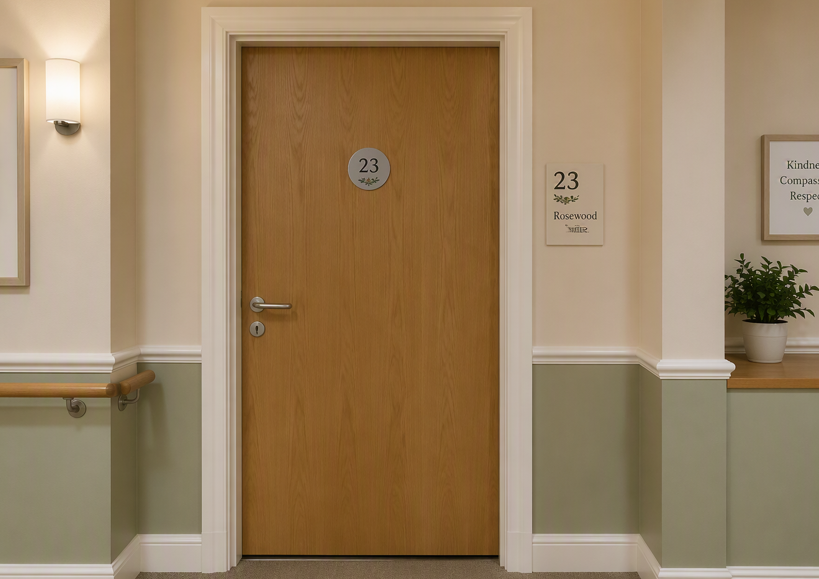
In care environments, resident rooms are often treated as low-risk areas within the water system.
They are managed as if water usage is broadly consistent, similar to a domestic setting, with regular daily use.
In practice, this assumption does not hold.
A mobile resident may use their shower every day. The resident next door, with limited mobility, may rarely use theirs. In some cases, ensuite facilities remain unused for extended periods.
On paper, both rooms sit under the same written scheme. Both receive the same level of oversight.
In reality, their risk profiles are fundamentally different.
This gap between assumed usage and actual behaviour creates a form of localised risk that standard Legionella control approaches often fail to detect.
The underlying challenge
Most Legionella control regimes in care facilities are built around periodic tasks and standardised assumptions.
These typically include:
• Routine temperature checks
• Scheduled outlet flushing
• Sampling and record keeping
• Written schemes based on expected usage patterns
These controls are important, but they rely on a critical assumption, that water usage across the building is reasonably consistent.
In care environments, it is not.
Resident mobility, care dependency, and patterns of daily living create highly variable usage across individual rooms. This variability is rarely captured within standard control measures.
As a result, systems can develop localised conditions that remain invisible.
In operational environments, we frequently observe:
• Adjacent rooms with completely different water usage patterns
• Low-use outlets that remain static for prolonged periods
• Return temperatures that degrade in low-demand areas
• No clear visibility of how often individual outlets are actually used
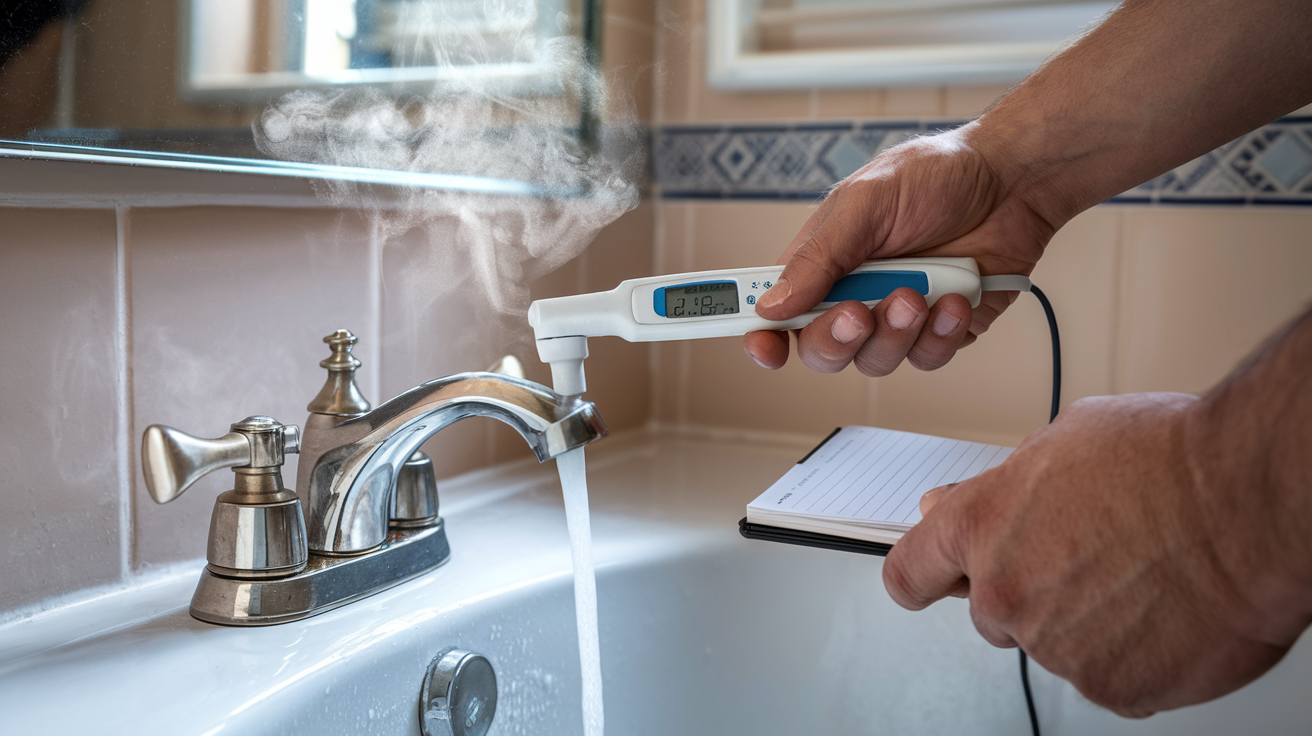
Because monitoring is not typically granular at room level, these conditions are not identified through routine compliance activity.
Why this matters in practice
The primary risk created by low or irregular usage is stagnation.
Where water does not move, it sits within branch pipework and outlets. Over time, this can lead to:
• Loss of temperature control
• Reduced disinfectant effectiveness
• Conditions that support bacterial proliferation
These risks are not evenly distributed across the system.
Instead, they become localised, often confined to specific rooms or branches that experience low usage.
This creates a situation where:
• The wider system appears compliant
• Communal areas perform as expected
• Documentation reflects appropriate control measures
Yet specific parts of the system operate under very different conditions.
This uneven risk distribution is rarely visible within standard inspection regimes.
The impact of temporary absence
Usage variability is further amplified by temporary resident absence.
When a resident is admitted to hospital, their ensuite may remain unused for days or weeks. During this time:
• Water remains static within local pipework
• Temperatures can drift away from control parameters
• Circulation in that branch may reduce significantly
In many cases, no targeted intervention is triggered.
Because the room is still classified as occupied, it does not fall into standard flushing protocols typically applied to vacant areas.
When the resident returns, they immediately resume using outlets that may have experienced extended stagnation.
This is a repeatable and predictable pattern across many care environments.
An operational blind spot
Care providers often focus control efforts on communal systems. Plant rooms, calorifiers, distribution loops and high-use outlets.
These areas are critical, but they are only part of the system.
Resident rooms form a large proportion of the overall network and are directly linked to vulnerable individuals. Despite this, they are frequently treated as low-risk spaces.
This creates an operational blind spot.
Risk is not solely determined by system design or central plant performance. It is also shaped by how the system is used at the point of consumption.
In care settings, that usage is highly variable.
Without visibility of this variability, control measures are applied uniformly to a system that is behaving non-uniformly.
A better way to think about Legionella management in care settings
Effective control requires a shift away from assumption-based management toward behaviour-based understanding.
Many organisations begin with compliance activity:
• Periodic checks
• Logbooks and documentation
• Standard flushing regimes
These provide a baseline, but they do not reveal how the system behaves day to day.
The next stage is diagnostic understanding. Identifying where usage is low, where stagnation may occur, and how different parts of the system perform under real conditions.
From there, organisations can move toward:
• Targeted flushing based on actual usage
• Identification of low-use outlets and branches
• Improved visibility of system behaviour
• Continuous monitoring where appropriate
This progression enables facilities teams to move from reactive compliance toward operational control.
Ultimately, the goal is governance confidence, The ability to demonstrate that the system is not just compliant on paper, but controlled in practice.
Practical takeaways for estates and care providers
Several key lessons emerge from this challenge:
1. Do not assume consistent usage across resident rooms
Usage is driven by mobility, care needs and absence — not by design assumptions.
2. Identify low-use outlets and areas
Rooms with limited mobility residents or intermittent occupancy present different risks.
3. Review flushing protocols against real conditions
Standard schedules may not account for rooms that are technically occupied but functionally unused.
4. Recognise temporary absence as a risk trigger
Hospital admissions and short-term absences can create predictable stagnation periods.
5. Focus on system behaviour, not just compliance activity
Understanding how water actually moves through the building is critical to effective control.
How LCS approaches this
At LCS, we position Legionella control as an operational discipline, not just a compliance exercise.
Our focus is on helping organisations understand how their water systems behave in real conditions.
In care environments, this means:
• Identifying areas of variable and low usage
• Interpreting system behaviour rather than relying solely on documentation
• Supporting targeted, risk-based interventions
• Providing continuous visibility where required
Monitoring technology is part of this approach, but it is not the objective.
The objective is control.
By understanding how usage patterns influence system performance, organisations can address risks that standard inspection regimes do not reveal.
Conclusion
Resident rooms in care facilities are not low-risk domestic spaces.
They are part of complex water distribution systems serving vulnerable individuals, with risk profiles shaped by highly variable usage patterns.
When this variability is ignored, stagnation risk becomes localised, uneven, and often invisible.
Compliance activity alone does not resolve this.
Real control comes from understanding how the system behaves, not how it is assumed to behave.
Organisations that make this shift move beyond reactive management and toward genuine operational control and long-term governance confidence.
#LegionellaControl#WaterSafety#LegionellaRisk#HealthcareFacilities#CareHomes#CareSector#WaterManagement#LegionellaPrevention#RiskManagement#Compliance