When “Compliant” Buildings Hide Dangerous System Behaviour
When Compliance Masks Operational Vulnerabilities

Introduction
A central London office building recently presented a stark example of the gap between compliance activity and true operational control.
Two calorifiers on the sixth floor were found operating at 98°C. This was not a brief spike or fluctuation. Both units were sitting at that temperature. The thermal pressure relief valves (TPRVs), which should activate well before water reaches this level, had not opened.
The building had an established Legionella management contract in place. Monthly visits were being carried out and no issues had been reported.
On paper, the system appeared compliant.
In reality, a potentially dangerous condition had developed without anyone on site being aware.
Situations like this illustrate an important truth about water safety management: compliance activity does not always equal operational control.
The underlying challenge
Most buildings manage Legionella risk through periodic inspections.
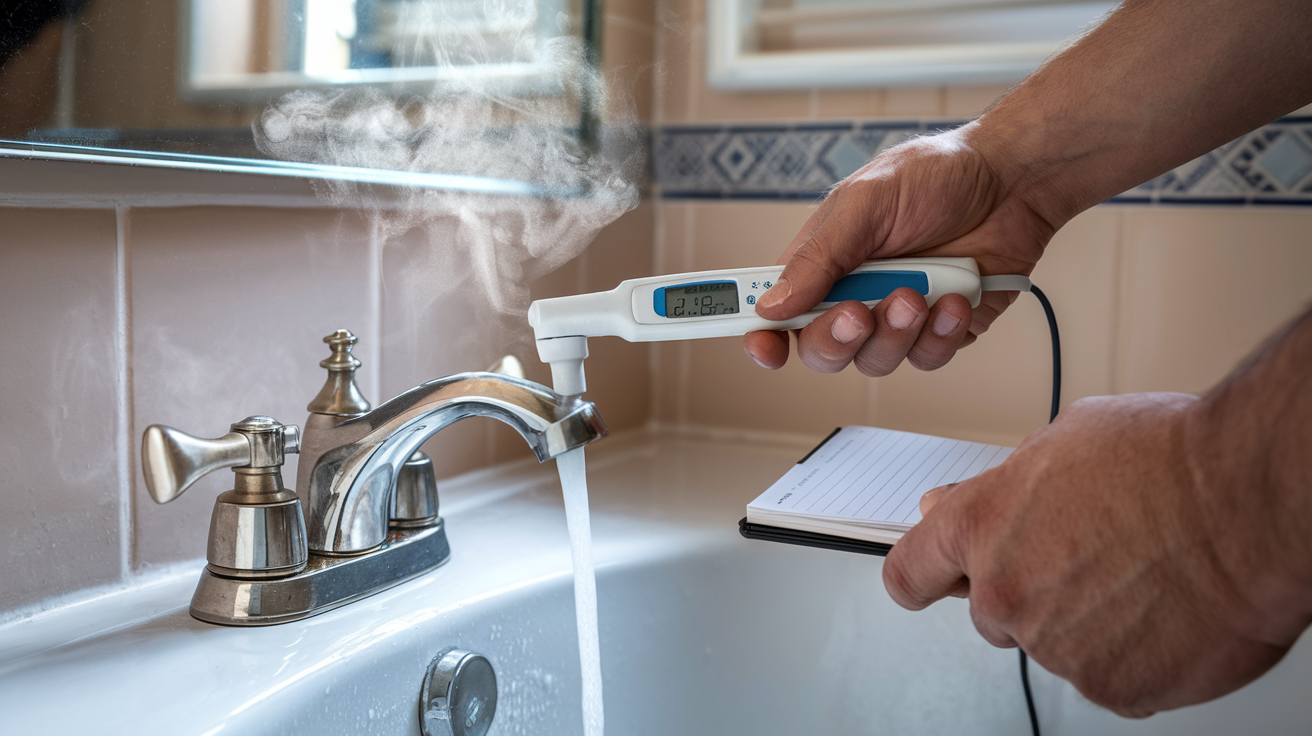
Typically, a contractor attends site once a month to record temperatures, review logbooks and confirm that control measures appear to be working. These visits produce documentation demonstrating that checks have been completed in accordance with guidance such as ACoP L8 and HSG274.
However, these inspections provide only a snapshot in time.
Between those visits, water systems continue to operate every hour of every day. Pumps cycle, temperatures drift, valves fail, and circulation patterns change. These events often occur outside inspection windows and therefore remain invisible.
In the London office example, the monthly inspections had not detected several important issues:
- Return pipework that was not circulating properly
- Deadlegs that were not shown on the schematics
- Pipe runs that did not match the drawings
- Calorifier temperatures rising far beyond normal operating ranges
Because the checks relied on the documented schematic and periodic measurements, these discrepancies remained hidden.
This is not unusual. Many estates operate with drawings that no longer reflect the true configuration of the system after years of modifications, refurbishments and maintenance work.
When the documentation is wrong, inspections based on that documentation can also be misleading.
Why this matters in practice
The implications extend well beyond Legionella risk.
In the case of the overheated calorifiers, two potential hazards existed simultaneously.
First, had the thermal pressure relief valves activated as designed, they would have discharged extremely hot water through pipework that terminated at floor level with no appropriate drainage or containment. In a busy office building with occupied floors beneath, that discharge could have caused significant damage or injury.
Second, if the TPRVs continued to fail and temperatures continued to rise, the calorifiers themselves could have become a serious safety risk. There are documented incidents of unvented cylinders failing catastrophically when pressure and temperature controls do not operate correctly.
The key issue is not simply the temperature itself. It is the lack of visibility.
No one on site knew the system had reached this condition. The problem was discovered only when continuous monitoring highlighted the abnormal behaviour.
Without that visibility, the issue may have remained unnoticed until a fault occurred, hot water services failed, or a safety system activated.
This highlights a broader operational challenge for facilities teams: buildings often run blind between inspections.
A better way to think about Legionella management
Legionella compliance should be viewed as part of a broader operational control strategy, not just a checklist of periodic tasks.
Many organisations begin their journey at what could be described as the
compliance activity stage:
- Manual temperature checks
- Periodic sampling
- Logbooks and inspection records
These activities are important, but they provide only intermittent visibility.
The next stage is diagnostic visibility. Understanding how a system actually behaves. This involves verifying schematics, analysing circulation patterns and identifying hidden features such as dead legs or poorly performing return loops.
Once organisations begin to see real system behaviour, they often recognise that additional visibility is required. This leads to continuous monitoring, where key temperatures and operating conditions are tracked throughout the day.
Continuous visibility allows facilities teams to move toward operational control. Instead of reacting when tenants report loss of hot water or when a periodic test fails, teams can detect trends earlier and intervene before problems escalate.
Ultimately, the goal is governance confidence: the ability to demonstrate, with clear evidence, that the water system is under control.
Practical takeaways for estates and facilities teams
For organisations responsible for water safety, several lessons emerge from cases like this.
1. Question what periodic checks actually show
Monthly temperature checks confirm that conditions were acceptable at that moment. They do not reveal how the system behaved before or after the visit.
2. Verify schematics against reality
Many water systems have evolved over time. Pipework modifications, refurbishments and repairs can leave drawings outdated. If inspections rely on incorrect schematics, blind spots will remain.
3. Look for system behaviour, not just compliance records
Patterns such as unstable return temperatures, intermittent circulation or gradual temperature drift often indicate underlying system issues.
4. Reduce reliance on reactive reporting
Many buildings still rely on occupants reporting loss of hot water or heating before a problem is investigated. By that point, the system has already failed.
5. Use data to validate remedial work
When changes are made such as replacing a valve, installing a new pump, altering pipework. Ongoing temperature data can confirm whether the intervention actually solved the problem.
How LCS approaches this
At LCS, our focus is not simply on monitoring technology. Our role is to help organisations move along the Legionella Control Journey from compliance activity toward operational control.
This begins with understanding the system itself.
We work with clients to examine schematics, verify system configurations and interpret operational data to reveal how water systems actually behave. Monitoring data becomes part of a broader diagnostic process rather than a standalone tool.
When anomalies appear, whether that is abnormal calorifier temperatures, poor circulation or inconsistent return temperatures. The goal is not simply to flag them, but to understand why they are happening.
That insight enables facilities teams to make informed decisions, prioritise interventions and avoid repeating ineffective remedial work.
In many cases, the greatest value is not in demonstrating compliance, but in helping organisations uncover issues that traditional inspection regimes simply cannot see.
Conclusion
The example of two calorifiers operating at 98°C in a busy office building is unusual, but the underlying pattern is not.
Across many estates, organisations are investing significant resources in Legionella management yet still lack clear visibility of how their water systems behave between inspections.
Compliance documentation may suggest that systems are under control, but without ongoing insight into real operational conditions, important risks can remain hidden.
Legionella compliance should not be viewed as a periodic exercise. It is an ongoing operational responsibility.
When organisations move beyond snapshot checks and begin to understand system behaviour continuously, they gain the insight needed to shift from reactive compliance to genuine operational control, and ultimately to governance confidence.
#LegionellaCompliance #WaterSafetyManagement #ACoPL8 #FacilitiesManagement #OperationalControl #BuildingSafety #WaterSystemMonitoring