From Competitive Advantage to Operational Necessity: Rethinking Water Safety Monitoring
What once differentiated leading organisations is now the baseline for maintaining control and assurance

Introduction
There is growing discussion across the property and facilities management sectors about the rise of digital water safety monitoring. It is often positioned as a technological shift. Something innovative, forward-thinking and, until recently, a competitive advantage.
However, this framing risks missing the more important point.
What we are witnessing is not simply the adoption of new technology, but a structural shift in how organisations are expected to understand, manage and evidence Legionella compliance. Continuous monitoring is becoming less about differentiation and more about operational necessity.
The Underlying Challenge
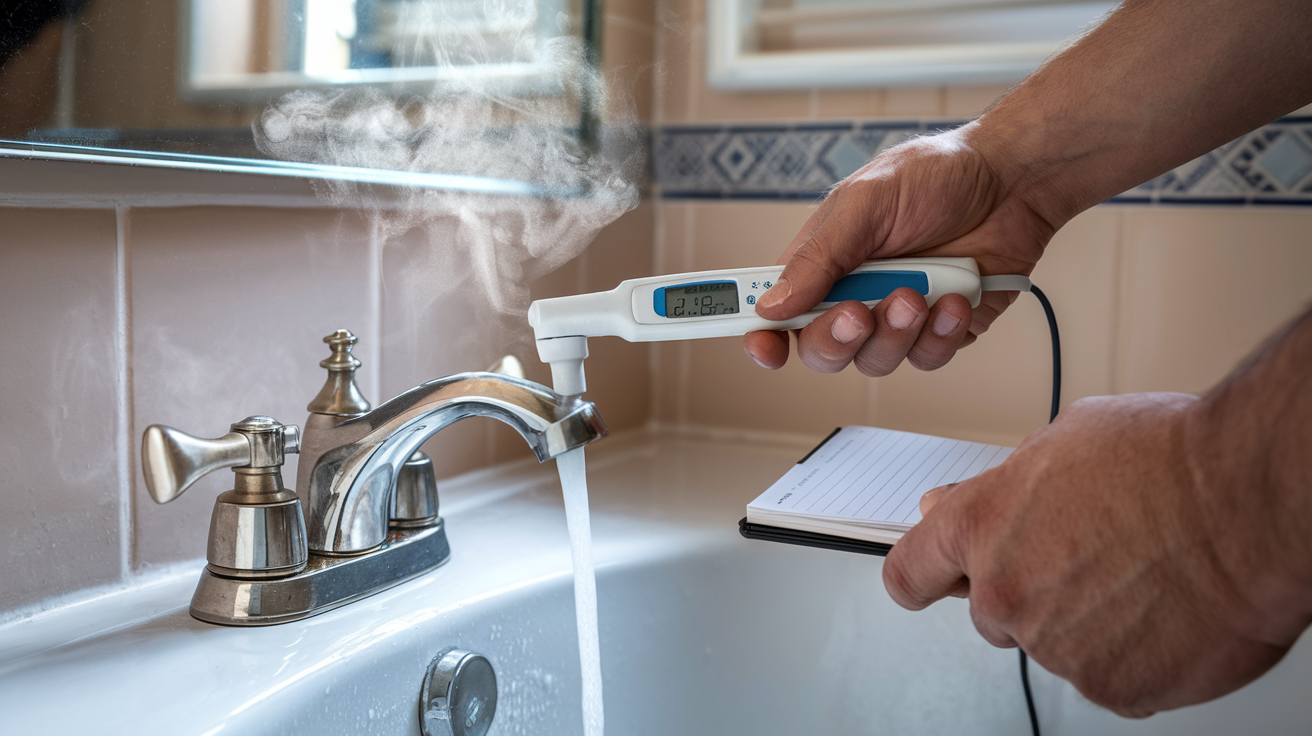
Traditional Legionella compliance models are built around periodic activity—manual temperature checks, flushing regimes, sampling and record-keeping. These activities are essential, but they are inherently limited.
They provide snapshots.
A compliant temperature reading at 10:00am does not confirm that a system remained within safe parameters at 2:00am, or over the weekend, or during periods of low occupancy. Yet many organisations continue to rely on these snapshots as evidence of control.
This creates a false sense of confidence.
Between checks, systems can drift. Temperatures fluctuate, usage patterns change, assets degrade and operational issues develop unnoticed. These blind spots are where risk accumulates—and where many organisations remain exposed.
Why This Matters in Practice
The external environment is reinforcing this challenge.
Regulators are increasingly focused on demonstrable control, not just documented activity. Housing providers and duty holders are being asked to produce audit-ready evidence that stands up to scrutiny. Insurers are paying closer attention to how risk is managed in reality, not just on paper. And when things go wrong, gaps in monitoring and oversight are becoming harder to defend.
At the same time, operational pressures are intensifying. Estates teams are managing larger portfolios with constrained resources. Reactive maintenance is costly. Administrative burdens continue to grow.
In this context, relying solely on periodic compliance activity is becoming unsustainable.
A Better Way to Think About It
The conversation should not start with “Do we need IoT?” but rather: “Do we truly understand how our water systems behave?”
Continuous monitoring is valuable because it enables a different level of insight:
- It reveals how systems perform between checks
- It highlights patterns and anomalies that would otherwise go unnoticed
- It enables earlier identification of emerging issues
- It supports more targeted and efficient interventions
In other words, it moves organisations along the Legionella control journey—from basic compliance activity towards diagnostic visibility and, ultimately, operational control.
But technology alone does not deliver this outcome.
Without the right interpretation, context and operational integration, monitoring can simply generate more data without improving decision-making.
The real shift happens when that data is translated into meaningful understanding of system behaviour.
Practical Takeaways
For organisations evaluating their current approach, a few considerations are critical:
First, assess where you are on the control journey. Are you primarily documenting activity, or do you have genuine visibility of system performance?
Second, identify where your blind spots are. Where do you lack confidence in what is happening between checks?
Third, consider how data is used. Is it informing decisions and driving action, or simply being stored as evidence?
Fourth, recognise that monitoring is not the end goal. The objective is operational control—being able to detect, understand and respond to issues before they escalate.
Finally, align monitoring with governance requirements. Increasingly, organisations need to demonstrate not just that they are compliant, but that they are in control.
How LCS Approaches This
At LCS, we view monitoring as part of a broader compliance operating model—not a standalone solution.
Our focus is on helping organisations progress through the stages of the Legionella control journey:
- From compliance activity to diagnostic visibility
- From visibility to operational control
- From control to governance confidence
This begins with understanding the system itself—its design, behaviour and risk profile. Monitoring is then applied strategically to close visibility gaps and generate meaningful insight.
Crucially, we work with clients to interpret what the data is telling them. This includes identifying underlying issues, understanding root causes and supporting informed operational decisions.
The result is not just more data, but better control—supported by defensible, evidence-led governance.
Conclusion
The increasing adoption of continuous monitoring reflects a deeper shift in expectations across the sector.
What was once seen as an advantage is becoming a baseline requirement—not because of the technology itself, but because of what it enables: visibility, understanding and control.
Organisations that continue to rely solely on periodic compliance activity risk operating with significant blind spots. Those that embrace a more informed, evidence-led approach are better positioned to manage risk, improve efficiency and demonstrate robust governance.
The question is no longer whether monitoring has a role to play.
It is how effectively it is used to understand and control the systems it is intended to protect.
#LegionellaCompliance #WaterSafetyManagement #ACoPL8 #HSG274 #OperationalControl #GovernanceConfidence #FacilitiesManagement #RiskManagement