From Reactive Maintenance to Predictive Control: Closing the Gap Between Visibility and True Operational Control
Understanding system behaviour in real time is the key to preventing issues, not just responding to them
Introduction
The concept of moving from reactive maintenance to predictive control has become a familiar narrative across building and facilities management. The promise is compelling: fewer failures, lower costs, improved tenant satisfaction and more predictable operations.
At a surface level, the distinction is clear. Reactive models respond after failure. Predictive approaches aim to intervene before disruption occurs.
However, the reality is more nuanced. Many organisations believe they are operating predictively when, in practice, they are still navigating significant visibility gaps. The difference between early warning and true operational control is often misunderstood, and this is where risk, cost and compliance exposure persist.
The Underlying Challenge
The traditional reactive maintenance cycle is well understood:
A system fails. An emergency contractor is called. Costs escalate due to urgency and timing. Occupants are impacted. Services are disrupted. Budgets become unpredictable.
This model is not just inefficient, it is inherently blind. It relies on failure as the trigger for action.
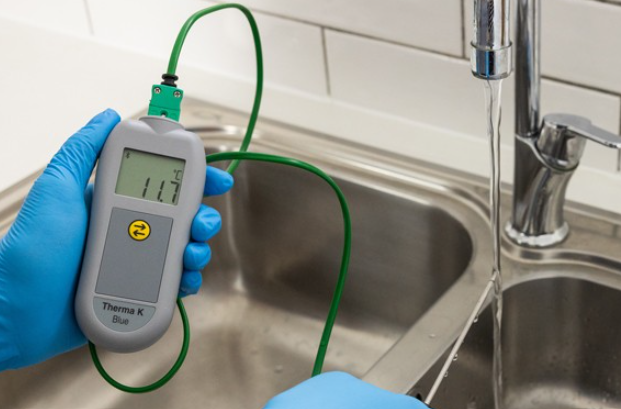
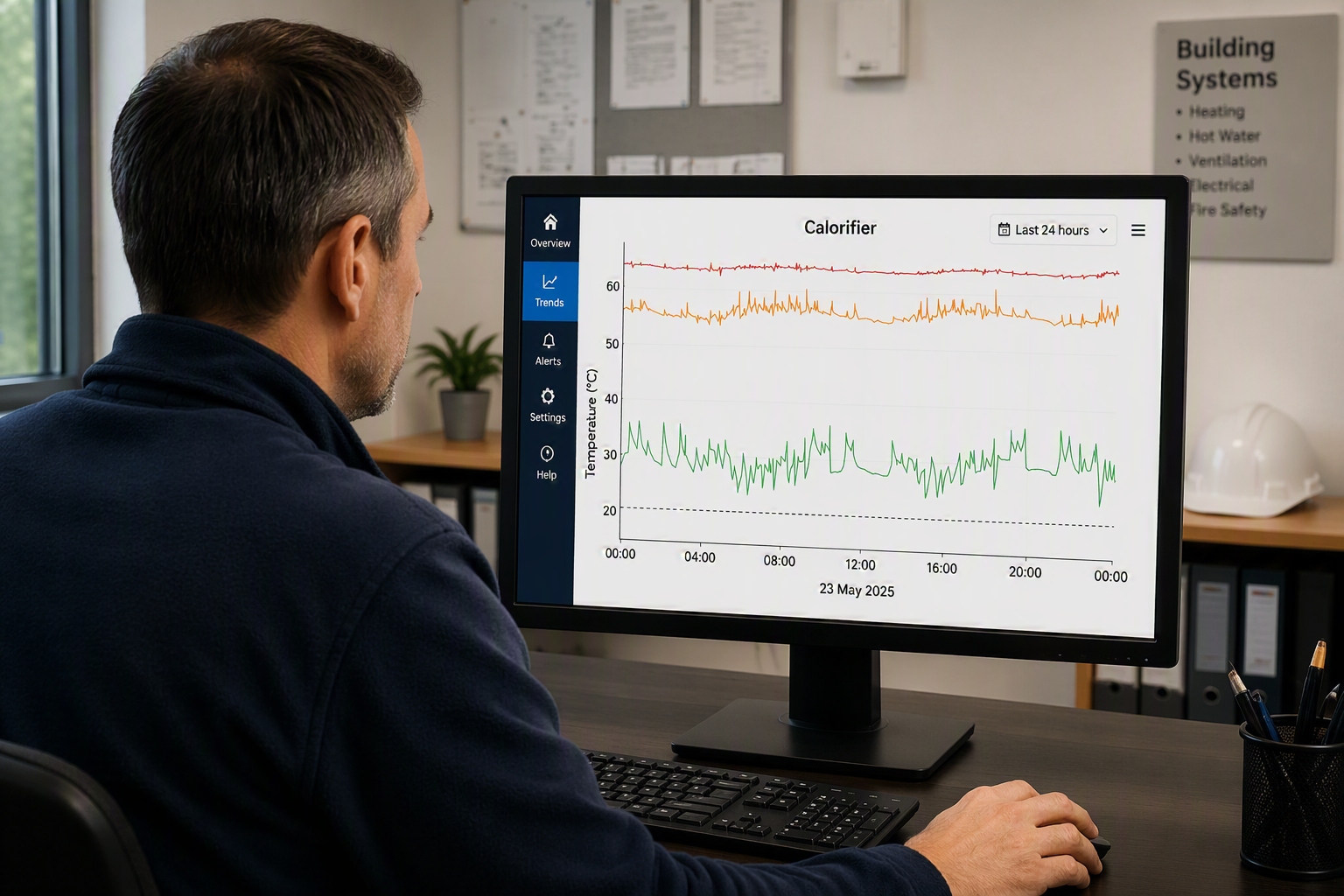
In response, many organisations have introduced monitoring technologies designed to provide early warnings. These systems track indicators such as flow, temperature, pressure, vibration and energy consumption.
The intention is sound. But the presence of data alone does not equate to control.
Without proper interpretation, context and integration into decision-making processes, monitoring risks becoming another form of passive visibility, an evolution of compliance activity rather than a transformation of it.
Why This Matters in Practice
Across water systems and mechanical infrastructure, failures rarely occur without warning. Instead, systems exhibit subtle behavioural changes in advance:
- Flow irregularities may indicate developing blockages
- Temperature inconsistencies can signal distribution issues
- Pressure variations often precede component degradation
- Vibration patterns reveal wear in mechanical assets
- Energy consumption shifts highlight declining efficiency
These signals can emerge days or even weeks before a critical failure.
The challenge is not whether these indicators exist. It is whether organisations are equipped to recognise, interpret and act on them effectively.
In many cases, they are not.
This creates a dangerous middle ground: organisations believe they have visibility because monitoring is in place, yet they lack the diagnostic understanding required to convert that visibility into meaningful intervention.
The result is false confidence.
A Better Way to Think About It
To move beyond reactive maintenance, it is helpful to reframe the problem through the lens of the Legionella Control Journey.
At the early stages, organisations focus on compliance activity, manual checks, periodic sampling and documentation aligned with ACoP L8 and HSG274. While necessary, this approach provides only snapshot visibility.
The next step is diagnostic visibility, understanding how systems actually behave. This involves analysing trends, validating system schematics and identifying root causes behind anomalies.
Continuous monitoring then provides ongoing data, but its value lies in enabling progression to operational control. This is where organisations begin to act earlier, intervene more precisely and manage systems proactively based on evidence.
The final stage, governance confidence, is achieved when decisions are supported by defensible data, oversight is strengthened and risk is demonstrably controlled.
The key point is this: monitoring is not the destination. It is a tool that supports progression along this journey.
Practical Takeaways
For organisations seeking to transition from reactive to predictive models, several principles are critical:
First, focus on understanding system behaviour rather than simply collecting data. Alerts should not be treated as isolated events, but as part of a broader pattern.
Second, challenge assumptions created by compliance activity. Passing checks and completed paperwork do not guarantee system performance between inspections.
Third, integrate monitoring insights into operational processes. Early warning is only valuable if it leads to timely and informed intervention.
Fourth, prioritise root cause analysis. Addressing symptoms without understanding underlying issues perpetuates the cycle of failure.
Finally, recognise that true predictive control is as much about organisational capability as it is about technology.
How LCS Approaches This
At LCS, the focus is not on monitoring in isolation, but on how organisations use information to achieve control.
This begins with establishing diagnostic visibility, ensuring that system behaviour is properly understood. Without this foundation, data risks being misinterpreted or underutilised.
From there, continuous monitoring is positioned as an enabler, not an endpoint. The objective is to support earlier detection, more targeted intervention and better-informed decision making.
Crucially, this approach helps organisations identify issues that would otherwise remain hidden, those developing between inspections, outside of compliance activity and beneath the surface of apparent normal operation.
The outcome is a shift away from reactive firefighting towards structured, evidence-led management. Not just fewer failures, but greater confidence in how systems are performing day to day.
Conclusion
The transition from reactive maintenance to predictive control is not simply a technological upgrade. It is an operational transformation.
While monitoring systems can provide early warnings, the real value lies in how those signals are interpreted and acted upon. Without this, organisations risk replacing one form of limited visibility with another.
True operational control comes from understanding system behaviour, identifying issues earlier and making informed interventions before disruption occurs.
Because in water safety and building management, the absence of failure does not always mean the presence of control.
#LegionellaCompliance #WaterSafetyManagement #FacilitiesManagement #OperationalControl #GovernanceConfidence #HSG274 #ACoPL8 #BuildingManagement