
As water safety specialists working alongside estates and facilities professionals in the education sector, we understand the unique challenges faced by higher education institutions when managing Legionella risks. University and college campuses typically comprise multiple buildings of varying ages, diverse water system designs, and fluctuating occupancy patterns—creating an environment where comprehensive water safety management is both essential and complex. This guide shares our expertise on implementing effective Legionella management in higher education settings, with particular focus on building complexity factors and practical risk assessment approaches that can streamline your compliance efforts. Understanding Your Legal Obligations in Higher Education Higher education institutions operate under strict legal obligations regarding Legionella control. As the responsible team, you must ensure compliance with: The Health and Safety at Work Act 1974 Control of Substances Hazardous to Health Regulations 2002 (COSHH) Management of Health and Safety at Work Regulations 1999 The Health and Safety Executive's Approved Code of Practice L8 (ACoP L8) HSG274 Parts 1-3 technical guidance Within universities and colleges, responsibility typically cascades through several key roles: Vice-Chancellor/Principal : Often holds ultimate responsibility as the duty holder Estates/Facilities Directors : Usually appointed as the "responsible person" for day-to-day water safety management Health and Safety Managers : Provide expertise and ensure regulatory compliance Building Managers : Oversee Legionella controls in specific campus buildings Specialist Contractors : External experts who may conduct assessments or implement control measures From our experience supporting higher education institutions, we've observed that those with clear responsibility structures and robust communication between these roles implement more effective water safety management programmes. Building Complexity Factors in Higher Education Estates The diverse nature of university and college estates creates unique challenges for Legionella management: 1. Diverse Building Portfolio Higher education estates typically include buildings from different eras with varying water system designs: Historic Buildings : Often feature legacy plumbing systems with potential dead legs and outdated materials Modern Campus Buildings : May include complex water systems with sophisticated controls Purpose-Built Facilities : Research laboratories, sports complexes, and performance venues with specialist water requirements Residential Accommodation : From traditional halls to modern en-suite apartments with different risk profiles This diversity requires tailored approaches to risk assessment and management rather than a one-size-fits-all strategy. 2. Specialised Facilities Universities and colleges maintain numerous facilities with unique water system requirements: Research Laboratories Specialised water systems including purified water supplies Cooling equipment with water circuits Emergency safety showers and eyewash stations Process water for experimental equipment Sports Facilities Swimming pools and hydrotherapy installations Multiple shower blocks with significant aerosol generation Spa facilities in some campus leisure centres Irrigation systems for outdoor playing fields Catering Operations Commercial kitchens with specialised equipment Multiple food service locations across campus High-capacity water heating and washing systems Specialised beverage dispensing systems Each of these specialised areas requires specific consideration within your Legionella management strategy. 3. Complex Distribution Networks The infrastructure connecting campus buildings creates additional complexity: Interconnected buildings supplied through ring mains Multiple plant rooms housing different water services Complex distribution networks with numerous sub-systems Building Management Systems (BMS) controlling various aspects of water systems In our assessment work, we've found that understanding these interconnections is crucial for effective risk management, particularly when implementing changes to one part of a system that may affect other areas. Key Risk Factors in Higher Education Settings 1. Occupancy Fluctuations Unlike most commercial buildings, higher education institutions experience dramatic occupancy variations: Term-time peaks with high, consistent water usage Vacation periods with significantly reduced occupancy Conference and event hosting creating unusual usage patterns Research facilities operating year-round alongside seasonal areas These fluctuations create significant challenges for maintaining water turnover and appropriate temperatures. Our assessments typically identify transition periods between academic terms as particularly high-risk, requiring specific management protocols. 2. Student Accommodation Residential facilities present particular challenges related to occupancy variability: En-suite proliferation creating numerous potential dead legs when unoccupied Varied usage patterns depending on student behaviour International student arrivals outside normal term patterns Vacation repurposing for conference delegates and summer schools For effective management, we typically recommend: Comprehensive flushing programmes during vacation periods Strategic isolation of unoccupied accommodation blocks Enhanced monitoring of sentinel points in residential areas Clear guidance for students on reporting water system concerns 3. Legacy Infrastructure Many higher education institutions maintain older buildings with infrastructure challenges: Ageing pipework with increased corrosion and biofilm development risks Poorly documented systems from multiple renovation phases Inadequate access for maintenance in historic buildings Mixed materials creating potential system incompatibilities These physical constraints often require both creative engineering solutions and enhanced monitoring regimes to manage effectively. 4. Specialist Research Areas Research facilities present unique challenges for Legionella management: Ultra-pure water systems with specialised treatment requirements Emergency safety equipment requiring availability despite infrequent use Cooling systems for research equipment operating at ideal Legionella growth temperatures Specialist water features for specific research applications We recommend creating dedicated risk assessment protocols for these areas, involving both estates teams and academic departments to ensure all specialist equipment is properly managed. Practical Risk Assessment Methodology Pre-Assessment Information Gathering Before conducting physical inspections, comprehensive information gathering provides vital context: Building asset registers documenting all water systems Schematic diagrams showing water distribution layouts Operational information including occupancy patterns and usage levels Maintenance records and previous assessment reports Building development history detailing system modifications This preliminary phase helps identify potential areas of concern and enables a more targeted physical inspection. Risk Assessment Team Assembly A successful Legionella risk assessment requires appropriate expertise: Water Hygiene Specialist : With recognised qualifications in Legionella risk assessment Estates Representative : Providing essential knowledge of campus infrastructure Building Services Engineer : Offering expertise on mechanical systems Health and Safety Professional : Ensuring assessment meets regulatory requirements For complex campuses, we recommend a team-based approach rather than relying on a single assessor to ensure all aspects of the built environment are properly evaluated. Physical Inspection Elements A thorough assessment should include detailed inspection of all water system components: Cold Water Systems Storage tank condition and configuration Temperature measurements at tanks and representative outlets Evaluation of usage patterns across term and vacation periods Assessment of insulation effectiveness Identification of dead legs or areas of poor flow Hot Water Systems Calorifier/water heater configuration and condition Temperature measurements at storage, distribution points, and outlets Evaluation of return loop balancing where applicable Assessment of TMV function and maintenance Identification of scalding risks and control measures Specialist Systems Laboratory water systems including emergency safety equipment Recreational facilities including pools and shower areas Cooling towers and air conditioning systems Irrigation and water features Scheduling Considerations Timing is critical when planning Legionella risk assessments in higher education environments: Term-time assessments to evaluate systems under normal load conditions Vacation period reviews to assess management of low-use conditions Pre-return checks before students return after extended breaks Coordination with campus development projects to evaluate new or modified systems We typically recommend a programme of scheduled assessments throughout the academic year to capture different operational conditions. Implementing Effective Management Systems Engineering Controls and System Modifications Physical interventions to reduce Legionella risk include: Temperature management enhancements such as improved calorifier capacity Distribution improvements including dead leg removal and insulation upgrades Monitoring system installations for continuous temperature logging Automatic flushing systems for infrequently used outlets These engineering solutions should be designed by qualified professionals and implemented with careful consideration of wider system impacts. Operational Controls and Management Systems Procedural controls are equally important in managing Legionella risk: Enhanced monitoring programmes with comprehensive coverage of sentinel points Building-specific temperature monitoring schedules based on risk profiles Flushing programmes tailored to occupancy patterns Holiday period protocols for system management during low occupancy These operational controls should be fully documented in your written scheme of control and regularly reviewed for effectiveness. Documentation and Record Keeping Consistent documentation provides both compliance evidence and management insights: Risk assessment reports and review schedules Temperature monitoring records across different campus zones Maintenance activities including cleaning and disinfection Contractor work records and system modifications Training records for estates and facilities staff Electronic record systems can significantly streamline this process while improving accessibility and creating automatic compliance alerts. Practical Recommendations for Common Campus Scenarios Based on our experience supporting higher education institutions, here are effective approaches for common scenarios: Multi-Campus Universities For institutions operating across multiple sites: Site-specific management plans reflecting local building characteristics Consistent documentation standards across all campuses Central oversight with local implementation teams Coordinated monitoring programmes with clear responsibility allocation Research-Intensive Institutions Universities with significant research facilities benefit from: Collaborative approach between estates and academic departments Specialised risk assessment protocols for research equipment Clear responsibility boundaries for specialist equipment Integrated emergency response procedures for system failures Historic Campus Buildings Institutions with period properties require: Enhanced monitoring for buildings with legacy plumbing systems Creative engineering solutions for access-restricted areas Phased improvement programmes addressing highest-risk elements first Comprehensive system mapping to identify historical modifications Conclusion: Building a Water Safety Culture in Higher Education Managing Legionella risks across diverse higher education estates requires a comprehensive approach that balances technical expertise with practical operational considerations. Success depends on: Leadership commitment from senior management teams Integrated management between estates, accommodation, and academic departments Continuous improvement through regular system review and enhancement Clear communication between all stakeholders As specialists in higher education water safety, we encourage institutions to view Legionella management not merely as a compliance exercise but as an essential component of your wider campus safety culture. With appropriate, proportionate approaches tailored to your specific estate, you can maintain excellent water safety standards while managing resources effectively. By focusing on the building complexity factors and key risk areas outlined in this guide, you can develop management strategies that effectively address your specific circumstances, ensuring both compliance and safety across your entire campus community.
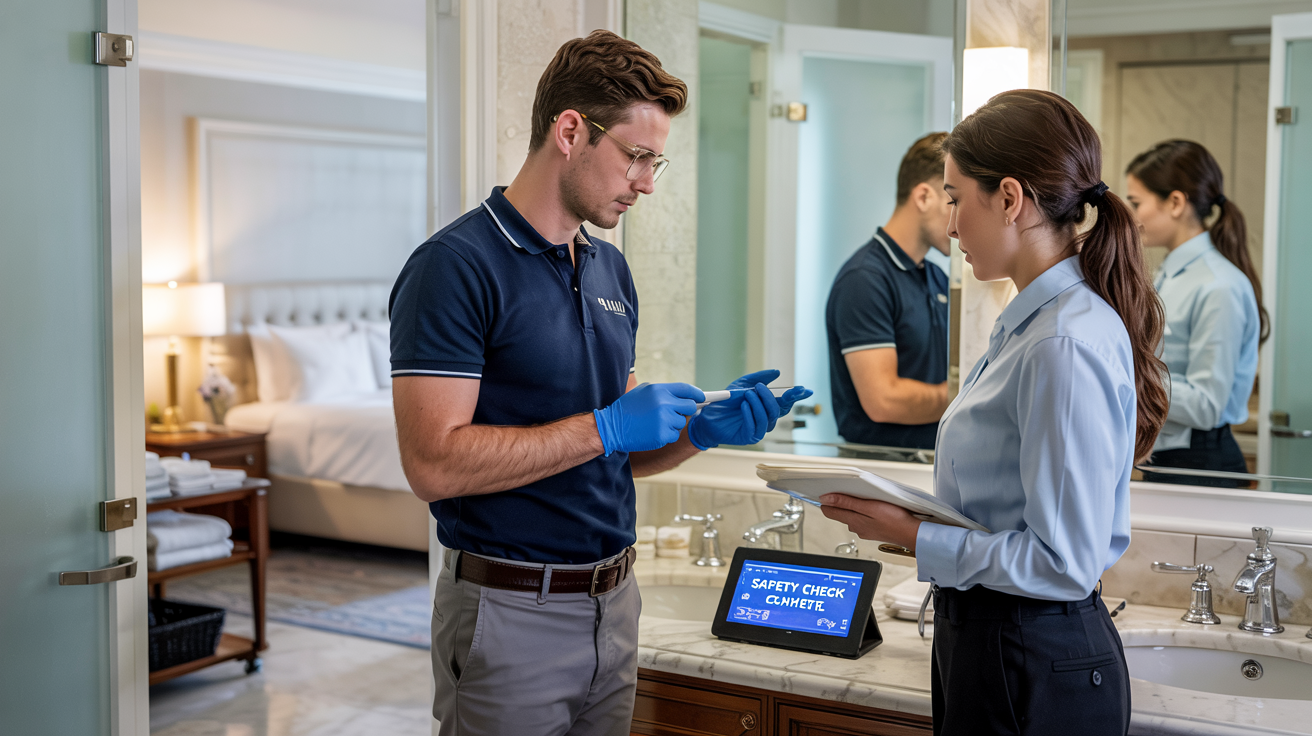
Conducting Legionella Risk Assessments in Hotels